
Moved Permanently
The document has moved here.

I wish I could remember when I first discovered Zoë Keating. It's hard to associate her work with a particular year, because there's something about it that seems to hail from either some almost-here future or some funky alternate history. If steampunk is Victoriana with computers, Keating's self-dubbed "avant cello" style is classical music with laptop-driven digital looping. Her work is lush, bizarre, mesmerizing – and absolutely fantastic.
According to her official bio on zoekeating.com:
Born in Canada and classically trained from the age of eight, Zoë spent her 20's dabbling in computer software while moonlighting as a cellist in rock bands. Inevitably, she combined the two and developed her now signature style while improvising for late night crowds at her San Francisco warehouse.
Zoë's self-released albums have sold 30,000 copies and several times been #1 on the iTunes classical and electronica charts. She has performed her music live on National Public Radio, on television, outdoors in the Nevada desert, in medieval churches, in punk clubs, and before thousands of screaming teenagers in mainstream rock venues across North America and Europe.
Zoë has worked with a wide range of artists, including Imogen Heap, Mark Isham, Curt Smith, The Dresden Dolls, Rasputina, DJ Shadow, and Paolo Nutini. From 2002 to 2006 she was a member of the cello-rock trio Rasputina. Most recently, Zoë has been composing music for film and ballet. In 2008 she performed her music live with the Valencia ballet, she composed music for a documentary called "Ghostbird" about the Ivory-Billed Woodpecker, and performed her signature layered cello on Mark Isham's score for "The Secret Life of Bees". She is featured on Amanda Palmer's solo release "Who Killed Amanda Palmer" and supported Ms. Palmer on her 2008 European and North American tours.
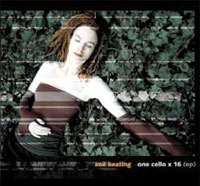
The influence of her fellow travelers can be felt in much of her output, as a trees-meets-tech, sweet-meets-sinister vibe runs through her work. Most of Keating's pieces start simple, but build to a kind of all-encompassing, all-enveloping tide of sound. For example, "Exurgency", the opening track to her first solo EP One Cello x 16 (2004), opens with a wavering high line that suggests that we're headed for something akin to "Flight of the Bumblebees", but then Keating brings in an additional layer of darkly insistent notes, followed by another and another until it feels like something's got to give – and when it does, when the song bursts into its next stage at the 1:58 mark, it tumbles suddenly into a softer place with quieter, regular notes like heartbeats for about twenty seconds before reintroducing an insistent, more energetic over-line, all the while being accompanied by a thrumming, sparse bass line that adds an almost sinister undercurrent to the whole thing. The mental image it conjurs up is evocative of childbirth followed by (or perhaps accompanied by) alternating senses of menace and peace, but with a recurring superpattern over the lot that eventually builds up to an ascending sweetness, perhaps suggesting some kind of transcendance before returning touches of the beelike insistence from the piece's beginning.
 |
||
 |
"Exurgency" |
 |
 |
||
I use the term "piece" deliberately, as Keating doesn't seem to be in the business of creating songs so much as soundscapes. "Updraught", one of my favorite pieces from One Cello x 16, begins with a strange creaking noise that for some reason always makes me picture a centuries-old Japanese well. It's accompanied by lightly swelling and fading waves of sound, eventually becoming subsumed completely by them before heavier notes come to the forefront, but even these notes have a subtler two-note rhythm set just behind them, like another instance of Keating's recurring heartbeat motif. The well's creak briefly re-emerges later in the piece, reminding us where we are, and then disappears again beneath Keating's sonic waves. I initially expected the creak to reappear at the end of the song to bring it full circle, but Keating instead rounds it out with a slow solo that's positively haunting.
Keating's second release, One Cello x 16: Natoma (2005), is an album-length follow-up to the One Cello x 16 EP, and thus features similar sounds and patterns. There are departures – "Fern" feels more traditional, while "Tetrishead" feels like it would have been right at home on the soundtrack to a Dave McKean film and "We Insist" begins with a perky, plucky rhythm slightly reminscent of Ray Lynch before re-introducing Keating's more familiarly menacing overtones – but pieces like "Sun Will Set" and "Legions (Reverie)" extend One Cello x 16. This is far from a bad thing.
|
||
|

"Optimist" |
|
|
||
There's greater distance, both in time and style, between Natoma and Into the Trees (2010), which feels slightly more like a collection of songs than a series of soundscapes. "Escape Artist," the album's first full piece following a 45-second opener, and "Don't Worry," the album's seventh track, both have more of a sense of verse-chorus-verse structure than her previous work. That said, the soundscapes are still very much in attendance.
For example, "Optimist," the album's first "single" (by which I mean it's the sample track offered on Keating's site for free) begins with a simple thudding drum beat, then introduces a number of trill-like high notes evocative of insects calling to one another across a night forest, an image reinforced by another set of low notes evoking a distant bullfrog squatting aside some hidden lake. This, combined with the album's title, may hint at some circa-1995 New Age stuff, but in the next breath she's weaving in a strand that's slightly electric, followed by a strand of light, nimble plucking, followed by a strand of smooth, long notes that seem to be both touched with mournful longing and glowing with vibrant life.
A similar sensibility runs through Into the Woods' sixth track, "Hello Night." The piece opens and closes with strangely whistle-like high notes that again suggest spring peeper frogs calling across a pond – but the middle of the piece is built from a mix of lightly strummed notes that feel airy and delicate, with more solid bowing creating a warm, strong center. The overall feeling this creates is something that, like the rest of Keating's work, is almost impossible to pin down yet fantastic in its own unique, curious beauty. One might even dub it – what's the word? – interstitial.
Taken together, Keating's albums form an excellent experience that alternates between sweet and sinister, while always remaining hypnotic. Although I love to put Keating's albums on while working, it's almost impossible for me to do any writing when "Legions (Reverie)" from Natoma begins because it always hijacks some primal subarchitecture of my brain, and it's the end of the album before I realize my fingers have stopped typing and I'm staring off into space. It'd be infuriating if the music wasn't so damned lovely. I wish there were more of it.
Author's Notes
For more on Zoë Keating, please visit zoekeating.com.
About the Author
Geoffrey Long (www.geoffreylong.com) is a media analyst, scholar, author, and creative consultant. He is an alumni researcher for the Convergence Culture Consortium at MIT, and he currently works at Microsoft, examining storytelling, transmedia and design trends and how technology and entertainment co-evolve. He has served on the IAF Executive Board since January of 2009, and is currently the Web Editor for interstitialarts.org.

